Saturday, December 18, 2021

HOMEOPATHY FOR NEURALGIA OR NERVE PAIN

Neuralgia is a stabbing, burning, and often severe pain due to an irritated or damaged nerve. The nerve may be anywhere in the body, and the damage may be caused by several things, including:

·         aging

·         diseases such as diabetes or multiple sclerosis

·         an infection, such as shingles

Treatment for the pain of neuralgia depends on the cause.

Types of neuralgia

Postherpetic neuralgia

This type of neuralgia occurs as a complication of shingles and may be anywhere on the body. Shingles   is a viral infection characterized by a painful rash and blisters. Neuralgia can occur wherever the outbreak of shingles was. The pain can be mild or severe and persistent or intermittent. It can also last for months or years. In some cases, the pain may occur before the rash. It will always occur along the path of a nerve, so it’s usually isolated to one side of the body.

Trigeminal neuralgia

This type of neuralgia is associated with pain from the trigeminal nerve, which travels from the brain and branches to different parts of the face. The pain can be caused by a blood vessel pressing down on the nerve where it meets with the brainstem. It can also be caused by multiple sclerosis, injury to the nerve, or other causes.

Trigeminal neuralgia causes severe, recurrent pain in the face, usually on one side. It’s most common in people who are older than 50 years.

Glossopharyngeal neuralgia

Pain from the glossopharyngeal nerve, which is in the throat, is not very common. This type of neuralgia produces pain in the neck and throat.

Causes

The cause of some types of nerve pain is not completely understood. You may feel nerve pain from damage or injury to a nerve, pressure on a nerve, or changes in the way the nerves function. The cause may also be unknown.

Infection

An infection can affect your nerves. For example, the cause of postherpetic neuralgia is shingles, an infection caused by the chickenpox   virus. The likelihood of having this infection increases with age. An infection in a specific part of the body may also affect a nearby nerve. For example, if you have an infection in a tooth, it may affect the nerve and cause pain.

Multiple sclerosis

Multiple sclerosis (MS) is a disease caused by the deterioration of myelin, the covering of nerves. Trigeminal neuralgia may occur in someone with MS.

Pressure on nerves

Pressure or compression of nerves may cause neuralgia. The pressure may come from a:

·         bone

·         ligament

·         blood vessel

·         tumour

The pressure of a swollen blood vessel is a common cause of trigeminal neuralgia.

Diabetes

Many people with diabetes   have problems with their nerves, including neuralgia. The excess glucose in the bloodstream may damage nerves. This damage is most common in the hands, arms, feet, and legs.

Less common causes

If the cause of neuralgia isn’t infection, MS, diabetes, or pressure on the nerves, it may be from one of many less-common factors. These include:

·         chronic kidney disease

·         medications prescribed for cancer

·         fluoroquinolone antibiotics, used to treat some infections

·         trauma, such as from surgery

·         chemical irritation

HOMOEOPATHIC REMEDIES

Homoeopathy today is a growing system and is being practiced all over the world. Its strength lies in its evident effectiveness as it takes a holistic approach towards the sick individual through promotion of inner balance at mental, emotional, spiritual and physical levels. When neuralgia is concerned there are many effective medicines are available in Homoeopathy, but the selection depends upon the individuality of the patient, considering the mental and physical symptoms.

ACONITUM NAPELLUS

Aconitum napellus is an excellent remedy for trigeminal neuralgia. Aconite is prescribed where the pain may come on after exposure to or may be worsened by dry cold winds. Here the pain appears suddenly and are worse on left side. Another marked feature is restlessness and an anxious look is present on face. Here the pains are intense and are accompanied by anguish.

ARSENICUM ALBUM

Arsenicum alb is another effective remedy for trigeminal neuralgia. Arsenic is prescribed where the pains feel drawing or burning in nature as if from needles. The person is anxious, restless and thirsty. Pains are ameliorated by warm applications and are aggravated by cold air, also worse after midnight.

COLOCYNTHIS

Colocynth is effective for sciatic nerve pain. Dull, stitching, shooting pain, like lighting shocks, in the hip which comes suddenly and shoot down to the posterior part of the thigh or to knee or foot, especially left side.  Pain is relieved by heat and hard pressure but worse from touch or motions.

MAGNESIUM PHOSPHORICA

Magnesium phos is one of the best remedies for nerve pain. Neuralgic pain relieved by warmth is the leading symptom of the remedy. The pains are unbearable, shooting, cutting, stitching in nature, shifting, better by rest, worse at night. The parts were tender to to pressure and numb. Pains sometimes tense in paroxysms, compelling her to cry out.

HYPERICUM PERFORATUM

Excessive painfulness is a guiding symptom of Hypericum. Hypericum is an effective remedy for nerve pain with tingling, burning and numbness. Hypericum is an effective remedy for nerve pain after injury to nerves, especially fingers, toes, nails. Shooting pains from the injured part. Injury to brain and spinal cord. Back pain due spinal injury.  It is best for traumatic neuralgia and neuritis.

KALMIA LATIFOLIA

Kalmia is prescribed when numbness along with nerve pain occurs.  Neuralgic pains, shoot downwards with numbness is characteristic to Kalmia. Pains affects a large part of of a limb or several joints and pass through quickly. Pains along the ulnar nerve, goes into third or fourth fingers. Left side is mostly affected.

CHAMOMILLA

Chamomilla is prescribed where unbearable pain is experienced associated with numbness. Chamomilla person is irritable and sensitive. Irritability is accompanied by violent anger. The patient feels pain more than it is in actual. Pain worse on touch.

BELLADONNA

Belladonna is prescribed for pinched nerve with severe nerve pain, which comes and goes suddenly. Pains are throbbing, sharp, cutting, shooting or clawing of maddening severity , coming and going in repeated attacks. Nerve pain is accompanied by bright redness and heat in the body. Pains are aggravated by touch or noise.

GNAPHALIUM

Gnaphalium is best for sciatic pain, sciatica when numbness associated with pain. Numbness alternates with sciatic pain. There is intense pain in the nerve accompanied by cramps or alternating with numbness. The pain is worse from lying and walking and better from sitting. Pain in calf and feet.

PUSATILLA NIGRICANS

Pulsatilla is excellent for facial neuralgia, especially of right side, with a drawing or tearing sensation. They are worse from chewing, warmth and lying on painful side. The mouth feels dry, but the person does not drink. Pains are better from cold applications and open air.

SPIGELIA

Spigelia is one of the most effective medicines for facial neuralgia when pain is affected on left side. There is lightening like pains come on from morning until sunset. The pain is extending to left eye, left chest, and left shoulder. Pains are worse from stooping or moving the head, from noise, during perspiration, from cold water and air and after chewing. The person has a flushed red face on the affected side and pains come on at certain times of day.

VERBASCUM

Verbascum is best for facial neuralgia of left side with a pinching sensation as if the parts were being crushed by tongs. Pains brought on by clenching teeth, change of temperature, pressure, open air and motion. The pain may extent to the chin and lower jaw.


Wednesday, December 15, 2021

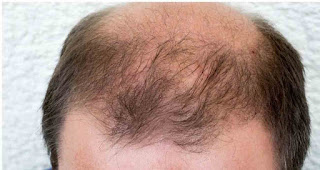
HOMEOPATHY FOR MALE-PATTERN BALDNESS/ANDROGENETIC ALOPECIA

Androgenetic alopecia is a common form of hair loss in both men and women. In men, this condition is also known as male-pattern baldness. Hair lost in a well-defined pattern, beginning above both temples. Over time, the hair line recedes to form a characteristic ‘M’ shape. Hair thins, and lost at the top of the head, often progressing or complete baldness. It is a combination of hormones, and genetic predisposition. A similar type of hair loss in women, female pattern hair loss, results in thinning hair on the mid-frontal area of the scalp and is generally less severe than occurs in males.

Etiology

Male-pattern hair loss is an inherited condition, caused by a genetically determined sensitivity to the effects of dihydrotestosterone, DHT, in some areas of the scalp.

Pathogenesis

Polygenic inheritance; variable penetrance. The hair follicles have increased numerous androgen receptors as well as increased activity of 5-a-reductase type II, leading to increased androgen sensitivity. Dihydrotestosterone also causes shift to telogen hairs. In female pattern hair loss, there may be an increased sensitivity to circulating androgen, as androgen levels are usually within normal limits.

Clinical features

Thinning of hair without scalp disease. Male pattern and Female pattern.

The presence of whisker hair at the temples may the first sign of this condition. The follicles produce finer, shorter and lighter or virtually unpigmented terminal hair, until a complete cessation of terminal hair growth results. Miniaturized hairs become increasingly evident, replacing coarser intermediate or terminal hair.

In males, the replacement of terminal by smaller hair occurs in a distinctive pattern that spares the posterior and lateral scalp margins, even in the most advanced cases and in old age. There is a recession of the anterior and bitemporal hairline, so that the forehead becomes high, followed by balding of the vertex. The loss is thus more noticeable at the vertex and in the bitemporal regions of the scalp. The rate of hair loss varies from person to person, depending on the hereditary factors.  

It has been recently suggested that bald men are more likely to have a heart attack and prostate cancer than with a full head of hair.

HOMEOPATHY MEDICINES

Homoeopathy today is a growing system and is being practiced all over the world. Its strength lies in its evident effectiveness as it takes a holistic approach towards the sick individual through promotion of inner balance at mental, emotional, spiritual and physical levels. When Androgenetic alopecia is concerned there are many effective medicines are available in Homoeopathy, but the selection depends upon the individuality of the patient, considering the mental and physical symptoms.

ARNICA MONTANA

Controls hair fall and promotes hair growth. Improve the blood circulation to the hair root. It enriches the scalp with nutrients which help to cure and control dandruff. It is a natural coolant, and hence prevents scalp disease. 

BARYTA CARBONICA

Hair falls from vertex and moustache. Baldness, especially on crown in young people. Scalp very sensitive to touch, worse from scratching and touch.

FLOURIC ACID

Falling out of hair after fevers.  Itching of the scalp. Brittle hairs.  Large patches entirely denuded of hair. New hair dry and break off. Often hair matts at the end. Baldness.

GRAPHITES

Falling of hair from sides of the head, and vertex. Hair falls out from beard, and eyebrows. Dry, tangled, matted or brittle hair. Bald spots.  Perspiration of scalp. Dandruff like milk crusts. Premature greying of hair.

LYCOPODIUM CLAVATUM

Hair falls out from temples and vertex. Premature greying of hair. Hair falls off after abdominal affections. Hair falling in nursing mother. After parturition, with burning scalding, itching of the scalp. Hair falls out on getting warm from exercise during the day. Dandruff.

NATRUM MURIATICUM

Falling of hair during pregnancy, and after childbirth. Hair comes out excess while combing. Falling off hair from forepart of head, moustache, temples, and beard. Scalp very sensitive. Face shining as if greasy.  Losing hair after acute headache. Dandruff on occiput.

PHOSPHORUS

Hair falls after mental emotion or sickness. Falling of hair in large bunches on the tufts, occiput, forehead, and on the sides above the ear. Round patches on scalp completely deprived of hair. The denuded scalp looks clear white and smooth. The roots of hair seem to be dry. Copious dandruff, fall out in clouds. Itching of the scalp.

SILICEA

Losing hair in bunches. Falling of hair after severe acute diseases, and nervous or hysterical headache. Falling of hair from the back of the scalp. Premature baldness.


Saturday, December 11, 2021

HOMEOPATHY FOR HAIR LOSS IN WOMAN

Many people think that hair loss only affects men. However, it is estimated that more than 50% of women will experience noticeable hair loss. About one-third of women experience hair loss at some time in their lives; among post-menopausal women, as many as two-thirds suffer hair thinning or bald spots. Hair loss in women often has a greater impact than hair loss on men, because it is less socially acceptable for them. Hair loss can severely affect a woman’s emotional well being and quality of life.

The main type of hair loss in women is the same as it in men. It is called androgenetic alopecia, or female (or male) pattern hair loss. In men, hair loss begins above the temples, and the receding hairline eventually forms a characteristic ‘M’ shape; hair at the top of the head also thins, often progressing to baldness. In women, androgenetic alopecia begins with gradual thinning at the part line, followed by increasing diffuse hair loss radiating from the top of the head. A women’s hairline rarely recedes, and women rarely become bald.

Causes

·       Genes: Family genes can cause thinning of hair along the top of the head.

·       Aging: Hormone changes as age advancing can cause balding.

·       Menopause: This type of hair loss often gets worse when estrogen is lost during menopause.

·       Hair style: Hair style of hair can cause hair loss when hair is arranged in ways that pull on their roots, like tight ponytails, braids, or crown rows. If the hair follicles are damaged, the loss can be permanent.

·       Dieting: Dieting for weight loss can cause hair loss.

·       Vitamins: Vitamin deficiency can cause hair loss.

·       Toxic substances: Toxic substances, including chemotherapy, radiation therapy and some medications.

·       Physical stress: Extreme physical stress or shock causes temporary hair loss. This category includes events like losing a lot of weight, surgery, anemia, illness and having a baby.

·       Emotional stress: Mental illness, death of a loved one, etc.

·       Thyroid: Thyroid hormone problems can cause hair loss

·       Medicines: Blood pressure medicines, gout medicines, high doses of Vitamin A.

·       Alopecia areata: Alopecia areata is an autoimmune skin disease that causes patchy hair loss on head.

Signs

·       Seeing more hair fall out daily either on brush, on the floor, in showers, on pillows, or in the sink.

·       Seeing noticeable patches of thinner or missing hair, including a part on the top of head that gets wider.

·       Seeing scalp skin through hair.

·       Having smaller ponytails.

·       Seeing hair break off.

Risk factors

Any girl or woman can be affected by hair loss. However, it is usually more common in :

·       Women older than 40

·       Women who have just had babies

·       Women who had chemotherapy and those who have been affected by other medications.

·       Women who often have hairstyles that pull on their hair, like tight ponytails, or tight braids, or use harsh chemicals on their hair.

·       Menopausal women.

HOMEOPATHY MEDICINES

Homoeopathy today is a growing system and is being practiced all over the world. Its strength lies in its evident effectiveness as it takes a holistic approach towards the sick individual through promotion of inner balance at mental, emotional, spiritual and physical levels. When hair loss is concerned there are many effective medicines are available in Homoeopathy, but the selection depends upon the individuality of the patient, considering the mental and physical symptoms.

ARNICA MONTANA

Arnica increases blood circulation in the scalp, stimulate hair follicles. Prevent hair loss in both man and woman.

BORAX

Hair is rough and horny, cannot be combed smooth. Hair tangled at the tip and stick together., cannot be separated.

CANTHARIS

Hair falls out when combing, especially during confinement and lactation. Severe dandruff with scales on the scalp.

CALCAREA CARBONICA

Hair loss from thyroid hormone imbalance. Falling of hair due to hypothyroidism. Excessive perspiration on the scalp, wets the pillow. Itching of the scalp. Cold spots on head. Chilly persons. Catches cold easily. Craving for eggs and indigestible things like dirt, chalk, pencils. Fatty, and obese persons, easily overworked and exhausted.

CALCAREA PHOSPHORICUM

Falling of hair in bunches on combing. From poor nutrition. Predisposition to glandular and bone diseases.

FERRUM PHOSPHORICUM

Hair loss from anemia. Takes cold easily. Great mental and physical lassitude indisposed to physical exertion, nervousness and prostration

FLOURIC ACID

Hair falling after chemotherapy. Falling of hair after fevers. Brittle air.

LYCOPODIUM CLAVATUM

Hair falls of after abdominal disease, after parturition with burning, scalding and itching of scalp, especially on getting warm from exercise during the day. Premature greying of hair. Loss of self- confidence. Poor self-esteem. Fear of public. Prefer warm drinks and foods. Craving for sweets. Flatulent abdomen.

NATRUM MURIATICUM

Hair falls out if touched, mostly on forepart of head. Scalp is very sensitive. Face is shiny as if greased. Falling of hair after childbirth. Hair comes out in excess while combing. Hair fall from hormonal imbalance. Severe headache, worse from heat of sun. Introverted and depressed women. Craving for salt and salty foods.

PHOSPHORIC ACID

Hair loss from grief and mental shock. Hair thins out, turns grey early. Hair falls after fever. Indifferent persons, aversion to talking.

PHOSPHORUS

Falling of hair in large bunches in spots.  Round patches of scalp, deprived of hair. The root of the hair seems to be dry; the denuded scalp looks clear, white and smooth. Itching of scalp. Presence of copious dandruff.

SEPIA

Hair loss from hormonal imbalance. Falling of hair during menopause, pregnancy, after childbirth and nursing of a child. Losing of hair after chronic headache. Irritable and indifferent women. Hot flushes followed by perspiration. Bearing down sensation in the uterus.

SILICEA

Premature baldness, Itching of the scalp before menses.

THALLIUM METALLICUM

Hair falls after acute exhausting diseases. Hair falls off with great rapidity. Hair fall from thyroid hormone issues.

THUJA OCCIDENTALIS

Hair loss. Hair grows slowly and splits after growing.

THYROIDINUM

Hair loss and greying of hair from thyroid hormone imbalance.

WIESBADEN

By the use of this remedy hair will grow rapidly and becomes darker. New hair take place of the fallen hair rapidly.


HOMEOPATHY FOR ACNE VULGARIS

Acne is a common chronic disorder affecting the hair follicle and sebaceous gland, in which there is expansion and blockage of the follicle and inflammation. It is characterized by the formation of comedones, erythematous papules and pustules, less frequently by nodules or pseudocysts and, in some cases, is accompanied by scarring.

Acne vulgaris occurs predominantly during adolescence and in early childhood. It affects mainly the face, upper back, and upper chest. It is prevalent in adolescents and young adults, with 85% of 16- to 18-year-olds affected. However, it may sometimes occur in children and adults of all age.

Acne usually persists until the early 20s, although in a few patients particularly women, the disease continues. Scar may follow healing, especially of chests or abscesses. Scars may be ‘ice pick’, atrophic or keloidal.

HOMEOPATHY MEDICINES

Homoeopathy today is a growing system and is being practiced all over the world. Its strength lies in its evident effectiveness as it takes a holistic approach towards the sick individual through promotion of inner balance at mental, emotional, spiritual and physical levels. When Acne vulgaris is concerned there are many effective medicines are available in Homoeopathy, but the selection depends upon the individuality of the patient, considering the mental and physical symptoms.

ASTERIAS RUBENS

Acne at the age of puberty. Red pimples on side of nose, chin, and mouth. Without pliability and elasticity. Itching spots. Acne worse on left arm and chest. Enlarged axillary glands, worse at night and in damp weather.

BERBERIS AQUIFOLIUM

Acne, blotches, and pimples. Clear complexion.

EUGENIA JAMBOSIA

Simple and indurated acne, painful along with comedones. Pimples are painful for distance around.  Red pimples and rosy skin on the sides of the nose, chin, and mouth.

JUGLANS REGIA

Comedones and acne of the face that itch violently, when acne bursts, it forms thick crusts. Acne is associated with menstrual irregularities. Itching and eruptions of small red pustules.

KALI BROMATUM

It should be tried when Asterias rubens fails. Acne, popular eruption, ulcer with punched out edges with tendency to penetrate and tenacious exudation. Pustular eruption resembling small pox, with burning pain, itching with vesicular eruption. Itchy pustular eruption on face, chest, and shoulders. Acne developing in individuals after sexual excess. Acne with unsightly scars and menstrual irregularities.

NUX JUGLANS

Variously sized reddish pimples and pustules on the face, chiefly around the mouth. Large painful blood-boils on the shoulders, and in the hepatic region. Adapted to all stages of acne.

PULSATILLA NIGRICANS

Acne at puberty, especially in girls who are overweight and have delayed menses. Acne from rich foods, fats, pork, pastries, desserts, and ice cream.

 AGARICUS MUSCARIUS

Pimples hard, like flea bites.

ANTIMONIUM SULPHURATUM AURATUM

Pustular acne. Itching of hands and feet.

ANTIMONIUM CRUDUM

Pimples on the face, shoulders, especially in fat person.  Sensitive to cold bathing. Thick, hard, honey-colored scabs. Dry skin and indigestion. Worse in summer.

ASIMINA TRILOBA

Itching red pimples, appearing first on the left, then on right side. Pustular acne with itching in evening when undressing.

BOVISTA

Acne, due to use of cosmetics. Worse in summer.

DULCAMARA

Humid eruptions on cheeks and face generally. Thick, brown, yellow crusts. Rash on face during menses. Worse in cold, and wet weather. 

GRANATUM

Pimples on the forehead and left temple with sore pain. They suppurate and on drying leave nodules. Itching in different parts of the body as if pimples would breakout.

GRAPHITES

Pimples on neck and back. Itchy, and dry skin. Severe itching and burning. Acne that oozes a sticky moisture, but bleed easily and has a tendency to develop thick crusts.  Worse during and after menses. Skin symptoms alternate with digestive problems.

HYDROCOTYLE ASIATICA

Acne of face, when accompanied with uterine derangement. Great dryness of skin.

LEDUM PALUSTRE

Red pimples on forehead, and cheeks, stinging on touching. Sticking pain. Acne after suppressed discharges or after excess of alcohol. Acne with rheumatism. 

MAGNESIA MURIATICA

Pimples on face and forehead, worse before menses and constipation.

MEDORRHINUM

Acne and pustules come out in blotches of reddish color during menses. Discharge from the acne has a fishy odor.

MERCURIUS SOL

Pimples around vesicular and pustular eruptions. Skin is always moist with viscid perspiration. Pimples oily and shiny skin. Itching, worse from warmth of bed.

NABALUS SERPENTARIA

Pimples on the face, about the nose, upper lip and chin.

RADIUM BROMIDE

Small pimples with itching, burning, swelling, and redness. Severe burning.

SARSAPARILLA

Acne with menstrual irregularities. Acne during pregnancy.

SUMBUL

Smooth, small, reddish spots on the forehead. Black pores on the face. Comedones.

General measures

·       Wash the face twice in a day and especially after sweating. Sweat can make acne worse.

·       Rinse with lukewarm water.

·       Avoid sunburn and suntan.

·       Vitamin supplements. Vit A and B6 are essential for skin.

·       Exercise helps natural acne healing process.

·       Drinks lots of water to clean the body off toxins and keep skin hydrated.